
What Supabase Handles—and What Your App Still Needs
A proposal says your application will use Supabase for the backend. That can be a sensible way to avoid rebuilding common infrastructure. It does not tell you whether bookings, cancellations, permissions, reporting, or recovery are included in the development scope.
The useful question is what the platform supplies and what your team must configure, design, and operate. Consider a small equipment-rental application: customers reserve an item, pay a deposit, upload a document, and collect the equipment. We will use that example to make the responsibilities concrete.
A managed backend supplies capabilities. Your product still needs rules for how people can use them.

Use a Real Workflow to Define the Platform Boundary
Start with the building blocks
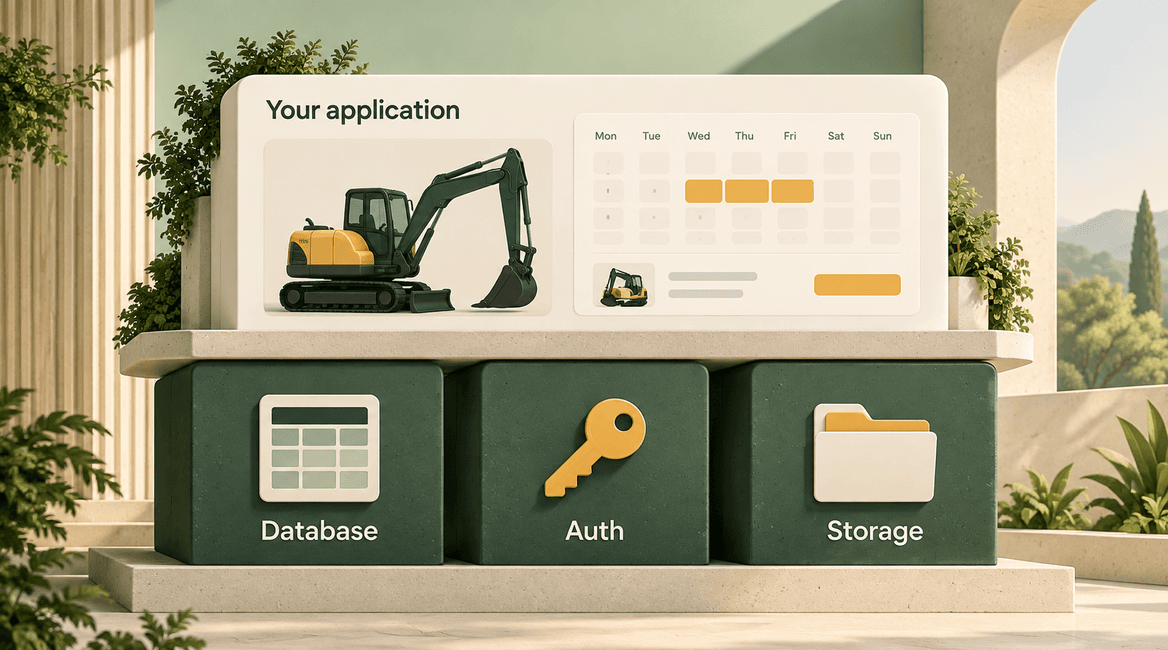
Supabase combines a PostgreSQL database with services for authentication, file storage, APIs, realtime updates, and server-side functions. Its architecture overview explains how those components fit together. They can remove substantial setup work without determining the application's behavior.
For the rental app, the database holds equipment and reservations, authentication identifies users, and storage holds uploaded files. None of that answers whether a deposit is refundable, whether two reservations overlap, or which staff member can approve a document. Those decisions belong in the product requirements and implementation.
The database stores records; you design the model
A developer still decides which tables exist, how they relate, which values are required, and which rules must hold under simultaneous requests. A rental item, a physical unit, and a product category are different concepts. Treating them as interchangeable may work in a demonstration and fail when the business adds a second identical item.
Ask for a model that reflects the first release's actual workflow. Who owns a reservation? Can an item be unavailable for maintenance? Does changing a price affect existing reservations? Which historical values must remain attached to an order? These are practical data questions with consequences for both development and reporting.
A managed database also needs appropriate queries and indexes. Putting a slow query on managed infrastructure does not automatically make it efficient. Review the operations that will grow with usage, such as availability search and staff lists, rather than judging performance from ten sample records.
Authentication identifies the person; permissions limit their actions
Signing in is one part of access control. A customer should see their own rental documents. A staff member may need access to assigned reservations. An administrator may need broader access, but that does not mean every signed-in user should receive the same database permissions.
Supabase supports Row Level Security for database access. Your team still writes and tests the policies and grants that represent your application. Privileged server credentials must remain server-side; they are not a shortcut for making frontend access work.
Test permissions using different accounts and direct requests, not only by hiding buttons. In our example, Customer A should not retrieve Customer B's document by changing a record identifier. Staff access should also be reviewed when roles change or someone leaves the business.
Generated APIs expose data; your workflow defines the allowed change
The Supabase Data API can make database access available without a hand-written endpoint for every table. This is useful for straightforward reads and writes with correctly configured access rules. It does not make every write appropriate for a browser to perform directly.
For example, a customer should not be able to set a reservation's payment status to paid simply because the application can update reservation rows. Payment confirmation, privileged state changes, and coordination across multiple records need trusted logic and database protections.
Choose the boundary per operation. A customer updating their display name is different from issuing a refund. Your application might use direct, policy-protected reads while routing booking confirmation through a database function or custom backend. Using Supabase does not require avoiding custom server code.
Storage holds files; the application manages their lifecycle
The rental app may accept a supporting document. The team must decide which files are allowed, who may upload them, how they are checked, when staff can view them, and when they should be removed. A file chooser connected to storage is only the start of that workflow.
Maintain an application record linking the file to the correct reservation and owner. Distinguish uploaded from accepted, and handle an interrupted transfer without claiming the document is ready. Our secure file-upload guide explains that lifecycle in more detail.
Realtime updates improve visibility; they do not reserve inventory
A live availability screen can help customers see changes without refreshing. It should not be the mechanism that guarantees a rental unit is available. Two people may act on the same displayed availability before either sees an update.
Enforce the reservation rule where writes are coordinated. The UI should explain a conflict clearly if another customer books first. Our double-booking guide covers why a fresh-looking calendar still needs database protection.
Server functions provide a place for logic; they do not define it
Supabase's Edge Functions provide a server-side execution option. The team must still implement authorization, input validation, integration calls, error handling, and retries where appropriate. Check runtime constraints against the actual job before selecting where it runs.
In the rental example, a quick privileged request and a long document-processing job have different requirements. A separate worker or service may fit some tasks better. Write down how work is queued, retried, and observed instead of treating “we will use functions” as a complete operating design.
Questions to Include in a Supabase Project Scope
- Which tables, relationships, and database constraints represent the product?
- Which actions can the client perform directly, and which require trusted backend logic?
- Who writes and tests database and storage access policies?
- How are payments, background work, and failed integrations reconciled?
- What usage assumptions inform the platform budget?
- How are database changes reviewed and deployed?
- Which data and files are backed up, and how will restoration be rehearsed?
- Who owns the project, billing, credentials, and post-launch support?
What a Complete First Release Still Includes
Walk through the rental from start to finish
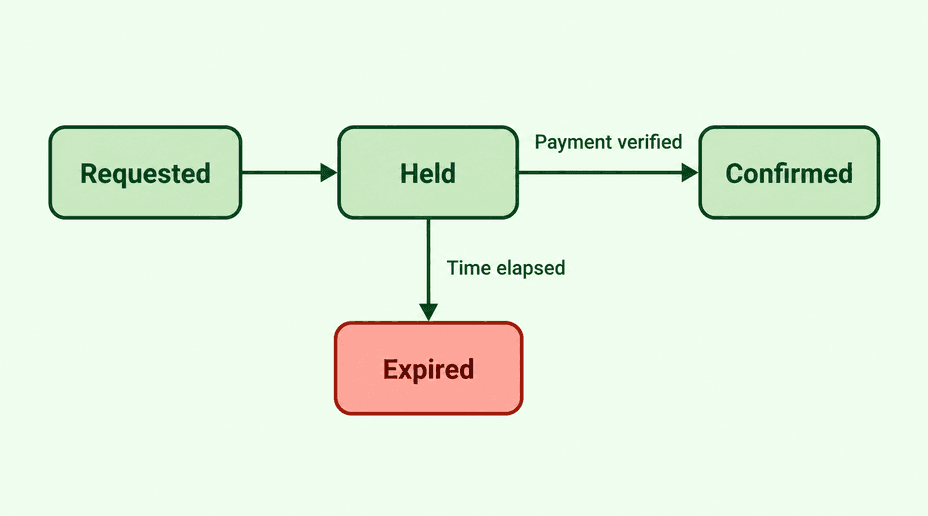
Suppose a customer chooses a unit for Friday afternoon. The app checks availability, creates a protected reservation or hold, starts the payment workflow, and handles its result. The customer uploads a document, staff review it, and the reservation becomes ready for collection only when the agreed conditions are met.
Supabase can support the records, identities, files, and execution involved. The developer still connects those capabilities into a reliable sequence. If payment succeeds after the hold expires, the application needs a defined resolution. If the document is rejected, the customer needs a correction path. These are deliverables worth naming in the estimate.
Budget for usage and responsibility
Evaluate costs using your expected users, database size, compute needs, file storage, downloads, and background activity. A small number of people repeatedly downloading large files can have a different cost profile from many people editing small records. Check current plan limits before committing to a budget; do not assume the free tier represents production requirements.
Assign someone to review usage, configure alerts, investigate errors, and maintain the application. Platform management reduces some infrastructure work, but product support still needs an owner and a clear operating budget after launch.
Verify what recovery actually restores
Supabase notes that database backups do not include the file objects stored through its Storage API. A restored database record is not proof that its corresponding document has been recovered. Confirm the backup scope and recovery procedures for every kind of data the application depends on. Supabase backup documentation explains this distinction.
A useful rehearsal starts with a separate environment: restore a sample reservation and its required document, check the relationship between them, and run the staff workflow. Record how long that takes and what additional accounts or configuration are required. Avoid discovering the missing dependency during an incident.
Keep the exit plan proportionate
PostgreSQL provides a familiar database foundation, but moving an application involves more than exporting tables. Inventory authentication dependencies, storage links, functions, policies, and deployment configuration. An exit plan can be a short document identifying what would need to move and who controls it.
This does not make Supabase a poor choice. It makes the choice reviewable. The same exercise is useful for any managed platform and is more informative than an absolute promise of “no vendor lock-in.”
FAQs
Is an app built with Supabase still custom software?
Yes. The custom work can include its interface, data model, permissions, business rules, integrations, and operating processes. Using a managed component does not make the finished product an off-the-shelf application.
Can we add a separate backend later?
Yes, but plan the boundaries. A separate service needs appropriate access and must respect the same business rules. Duplicating rules across several paths without coordination can introduce inconsistencies.
Does Supabase remove the need for a developer?
It reduces work in several backend areas. It does not translate an incomplete business process into a secure, tested product automatically. The required expertise depends on the application's complexity and the consequences of errors.
Should we self-host to save money?
Compare the operating work as well as the hosting bill. Self-hosting changes who handles provisioning, updates, monitoring, backups, and recovery. It is a separate operational decision, not an automatic upgrade.
DevConex can help define the boundary between platform capabilities and application work. Discuss your app's requirements to turn a proposed stack into a concrete delivery scope.