
MVP Development: What Belongs in Your First Version
MVP development means deciding what you need to build to test a useful product idea with real users. A minimum viable product should let a defined audience complete a meaningful task while helping you learn whether the approach deserves further investment.
The difficult part is deciding what to leave out without breaking that task. Use one realistic customer journey, explicit assumptions, and a simple feature exercise to create a first version that is small enough to deliver and complete enough to evaluate.
Your first release needs a complete path to value, even when some of the work behind it is still manual.

Build Around One User, One Problem, and One Complete Journey
Name the assumption you need to test
“People will use our platform” is too broad. A more useful assumption is: local customers will submit a service request online, accept a confirmed appointment, and complete the visit without repeated scheduling calls. That describes behavior you can observe.
State who those customers are, what they currently do, and why your proposed approach might be better. Interviews and a prototype may answer some questions before you need production software. An MVP is not automatically the first or cheapest way to learn.
Use a small service-booking example
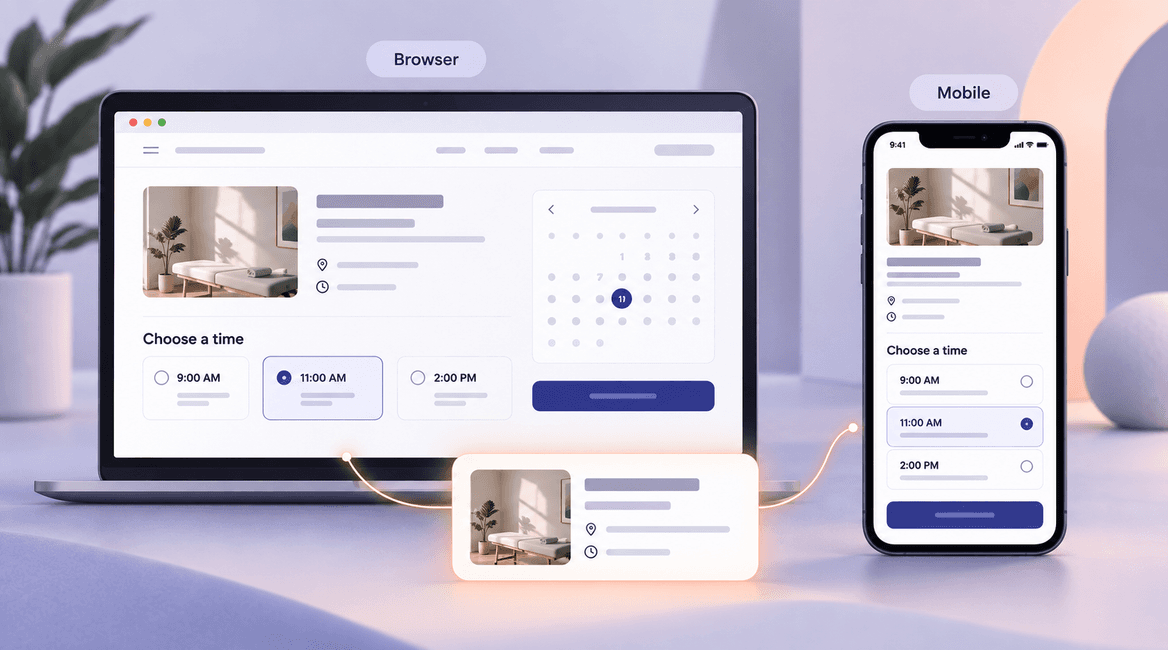
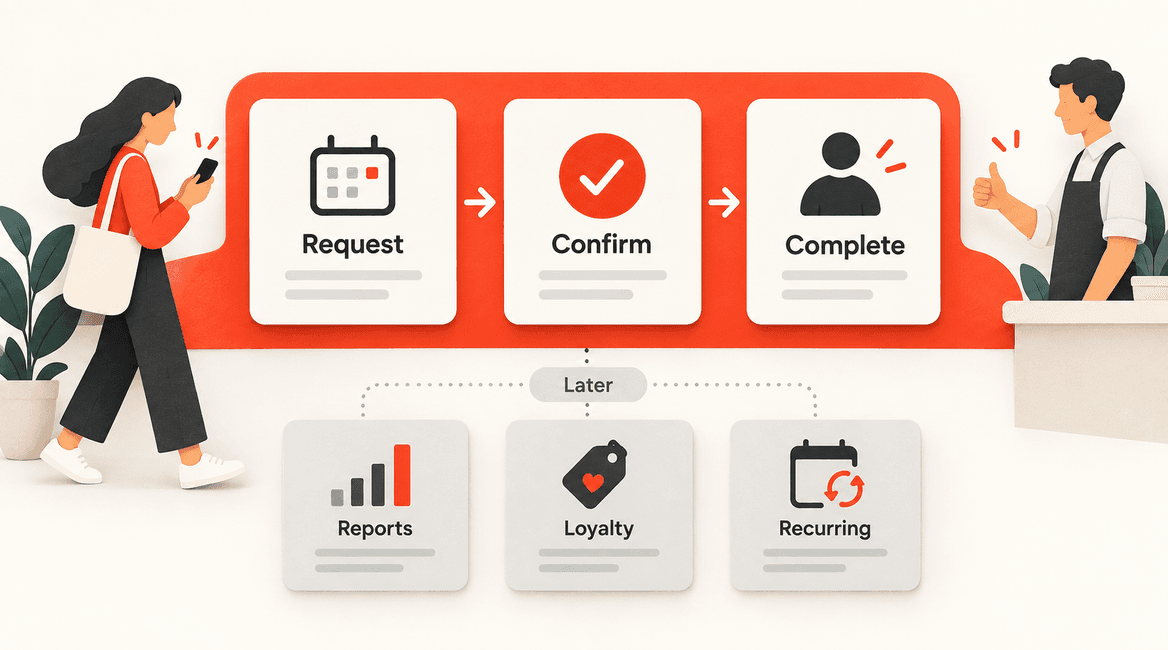
Imagine a business testing online requests for one service in one area. The first journey could be: a customer reads the service details, submits a preferred time, receives confirmation from staff, and completes the appointment. Staff need to review requests and avoid confirming unavailable times.
This example uses booking requests, not instant reservations. That distinction makes a manual scheduling step acceptable if customers understand it. If the core promise were guaranteed real-time availability, removing that capability would undermine the experiment.
Identify the essential features and controls
The first version needs clear service information, a request form, a way for staff to view and manage requests, and a reliable confirmation process. It also needs basic access controls, useful error messages, and a recovery path for failed notifications.
A small release still needs to work. Do not classify privacy, authorization, or the ability to recover important data as optional polish. Decide the level of operational readiness based on the product's actual use and consequences, then include it in scope.
Defer features that do not determine the first outcome
For this booking-request experiment, loyalty points, detailed customer dashboards, recurring appointments, and advanced reports may be later additions. A simple count of requests and completed visits can be enough to evaluate the initial journey.
Deferring a feature is a decision with a reason, not a permanent rejection. Write down what evidence would bring it back. Recurring booking might become relevant when repeat customers repeatedly ask for it and staff can quantify the manual effort.
Make manual steps visible and bounded
Staff could review availability and send a confirmation manually in the first release. Document who does it, how often, what happens outside working hours, and how many requests the process can support. Show the customer a truthful status such as “Request received” until confirmation occurs.
Track the time this work takes. Manual steps can help you learn, but hidden manual effort can make the product appear more scalable than it is. Set a trigger for revisiting the approach when volume or error rates exceed the agreed limits.
Run a practical prioritization exercise
Write every proposed feature on a separate row. For each, answer four questions: which user task does it support, which assumption does it test, what happens without it, and what does it depend on? Ask the people delivering and operating the product to review the answers together.
Put each feature in one of three groups: required to complete the first journey, useful but replaceable with a bounded manual step, or deferred. Estimate effort after you understand dependencies. A feature that looks small on a screen may require a large change to the underlying workflow.
- Service request form: required because customers need a way to express the request.
- Staff confirmation: required as a process; a manual step may be enough for the pilot.
- Customer account: potentially deferred if this first journey does not require ongoing self-service access.
- Loyalty rewards: deferred because they do not test whether customers will complete the initial booking journey.
- Permission checks: required wherever staff or customers access information that should be restricted.
Review the resulting scope as a whole. If removing a feature leaves a user stranded, either restore it or change the journey explicitly. Several individually reasonable cuts can create an unusable product when combined.
Define acceptance criteria before development
Write observable conditions for completion. For the request form: required information is validated, an accepted request is retained, staff can see it, and the customer receives an accurate acknowledgment. Test the failure path as well as the success path.
For staff confirmation: two people cannot unknowingly confirm incompatible appointments, the customer sees the correct time, and cancellations have an agreed process. These checks keep “small scope” from becoming “unclear behavior.”
Decide what evidence will guide the next release
Measure meaningful progression: requests started and submitted, confirmed appointments, completed visits, abandonment, and staff handling time. Talk to users who stopped as well as those who completed the journey. Downloads or sign-ups alone may not show whether the product solved the problem.
Choose a pilot audience and review point before launch. Record what would lead you to continue, change direction, or stop. Use the result to choose the next experiment, rather than automatically building everything in the deferred list.
Your First-Version Scope Checklist
- Name the initial audience and the problem you are testing.
- Write one complete journey from starting the task to receiving value.
- Identify the assumption each essential feature helps test.
- Make manual steps, owners, capacity, and customer expectations explicit.
- Keep access, data handling, essential testing, and recovery in the plan.
- Record deferred features and the evidence needed to reconsider them.
- Agree on observable acceptance criteria and meaningful pilot measures.
- Set a review point before committing to the next release.
Keep the First Release Small for a Reason
A disciplined MVP is small because the team understands what it needs to learn. It should not be small merely because important responsibilities were omitted from the estimate. Ask a potential partner to explain the complete user journey and how each scope decision supports it.
DevConex can help turn a product idea into a focused initial scope. Share the audience, problem, and first outcome you want to test, along with your budget and timing constraints.
FAQs
Is an MVP the same as a prototype?
A prototype can demonstrate or test an interaction without operating as a live product. An MVP is a usable initial offering intended to test value with real users. Choose the lightest approach that can answer the current question.
How many features should an MVP include?
There is no useful universal count. Include what the first audience needs to complete the chosen journey, along with the controls required to operate it responsibly. Several screens may support one essential task.
Can we use existing tools for the first version?
Yes. Existing forms, scheduling tools, and manual operations can help test demand if they support the intended experience. Document their limitations and do not mistake a trial's manual capacity for a finished scalable system.
What happens when early users request more features?
Record the underlying problem and look for repeated evidence. A request may point to a simpler fix than the proposed feature. Review it against the first release's purpose and the next question you need to answer.