
How to Choose a Software Development Company
Choosing a software development company starts with understanding how a team will solve your business problem. A polished portfolio helps you discover potential partners, but it does not tell you who will build your product, how decisions will be made, or what happens after launch.
Whether you need a customer portal, a web application, a mobile app, or an AI-enabled workflow, the challenge is similar: compare companies that may describe the same project very differently. One proposal includes design and testing. Another assumes you will provide the designs and treats ongoing support as a separate service.
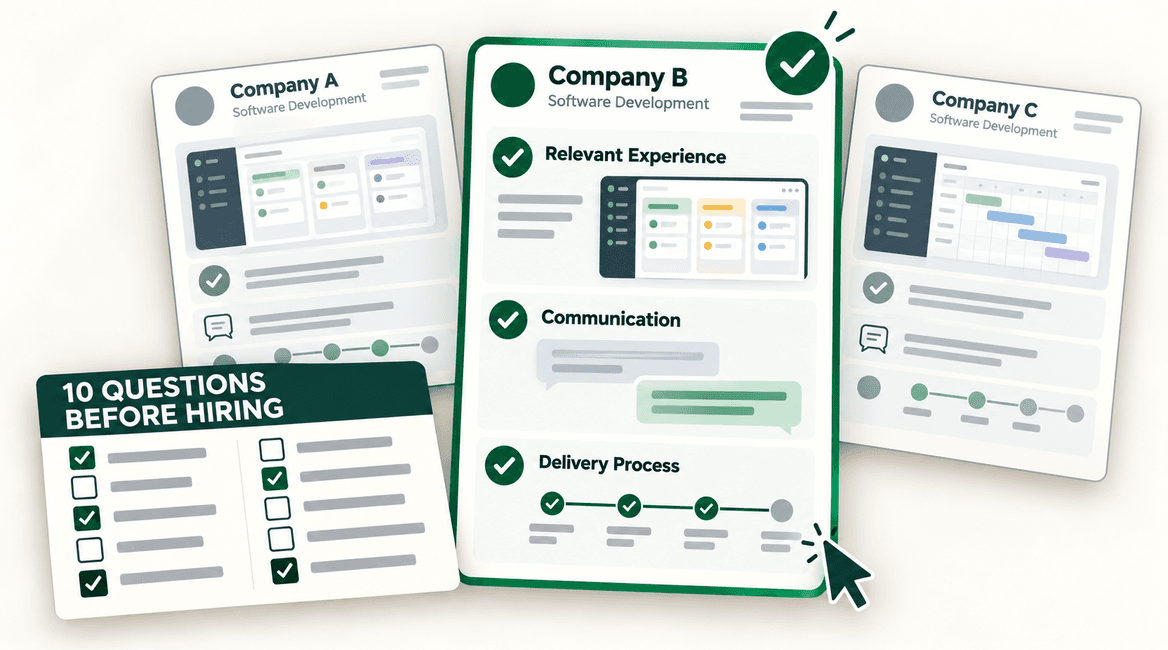
The ten questions below help you compare relevant experience, communication, and delivery process before you commit. Use them in your first conversations, then ask shortlisted companies to put the important details in writing. The goal is to understand what you are buying and how the working relationship will function.
A strong development partner makes the work easier to understand: what you are building, why it matters, who is responsible, and how you will know it works.

10 Questions to Ask a Software Development Company
Before contacting companies, prepare a short brief covering your users, the problem they face, your current tools, essential features, budget range, and any meaningful deadline. You do not need a technical specification. A clear starting point helps each company respond to the same business need.
1. Have you solved a problem similar to ours?
Look beyond whether a company has worked in your industry. Relevant experience can also mean handling similar workflows, integrations, user permissions, or operational constraints. A team that built a scheduling system may understand your booking challenges even if its previous client served a different market.
Ask for evidence: request a walkthrough of a comparable project and clarify what the company actually delivered. What was the original problem? Which parts did its team design and develop? What changed during the work? When available, speak with a client reference about communication, setbacks, and support.
2. How will you define the scope before development starts?
Ask how the team turns your idea into an agreed plan. Depending on the project, discovery might include mapping user journeys, reviewing existing systems, creating wireframes, identifying integrations, and prioritizing features. A small, straightforward build may need less discovery than a complex application.
A useful answer names the deliverables: a prioritized scope, assumptions, open questions, and criteria for accepting the work. An early budget range can be helpful, but the company should explain what it still needs to learn before making a firm commitment.
3. Who will actually work on our project?
The people presenting the proposal may have different roles from the people delivering the project. Ask who will handle project management, design, development, technical decisions, and quality assurance. Understand whether those roles are covered by employees, contractors, or a combination.
Look for clear accountability: know your main contact, how technical questions reach the developers, and what happens if someone becomes unavailable. Distributed teams can work well when responsibilities, availability, and communication overlap are explicit. Location alone does not establish delivery quality.
4. How will we communicate and review progress?
Ask to see an example of a project update and understand how often you will review working software. Updates should explain completed work, upcoming priorities, blockers, and decisions needed from your side. Agree on where feedback belongs so important requests do not disappear across email and chat.
A practical arrangement includes: a regular review schedule, access to a shared task list, and a clear escalation contact. Your business should also appoint someone who can consolidate feedback and approve decisions. Consistent communication requires participation from both sides.
5. What does the estimate include, and what could change it?
Two quotes are only comparable when they cover similar work. Ask whether the estimate includes discovery, design, integrations, data migration, testing, deployment, and training. Separate development fees from ongoing expenses such as hosting, software subscriptions, and third-party API usage.
Request written assumptions and exclusions. For example, a customer portal estimate might assume your existing customer data is clean and accessible. If that assumption is wrong, additional work may be necessary. Ask how the company flags those discoveries and seeks approval before expanding the budget.
6. How will you handle scope changes and delivery dates?
Projects often change as people see designs and test early versions. Ask how new requests are assessed, estimated, and approved. A useful process shows the effect on cost and timing before the team proceeds, and distinguishes a new feature from work already included in the agreed scope.
Discuss a real scenario: if you add online payments halfway through development, what happens next? The answer should cover dependencies, tradeoffs, and possible changes to the launch plan. Also ask which deadlines depend on your content, feedback, or access to outside systems.
7. Why is your proposed technology appropriate for this project?
You do not need to choose programming languages yourself. You do need to understand why the recommended approach fits your users, budget, integrations, and maintenance needs. Ask whether an existing platform, a custom build, or a combination makes the most sense.
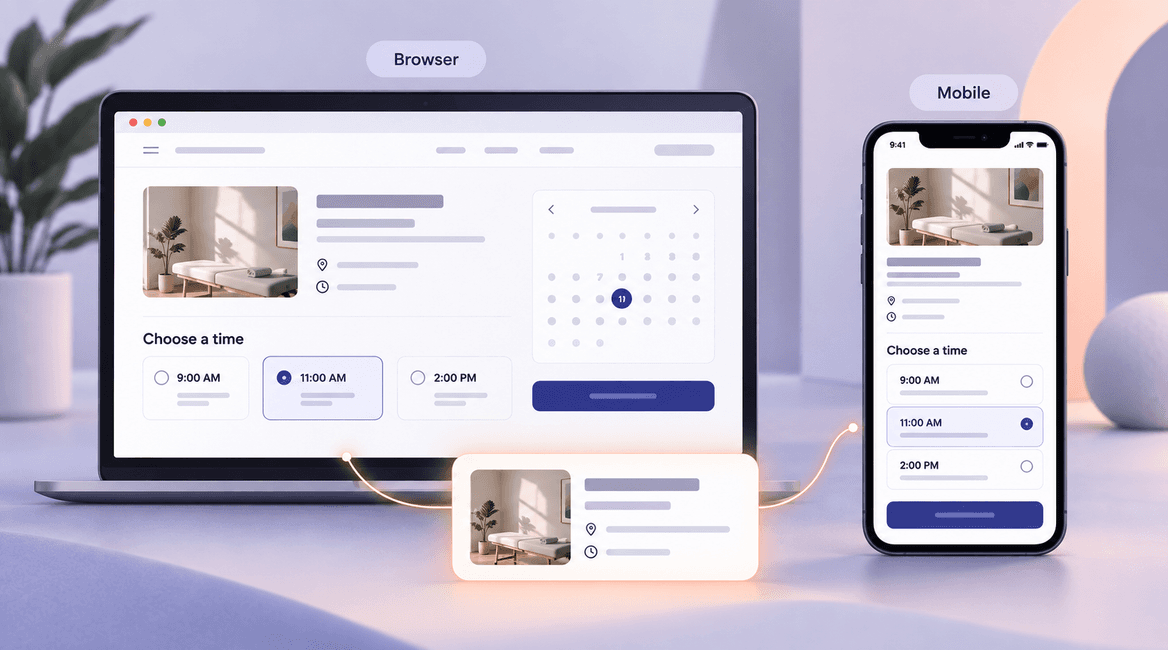
Look for understandable tradeoffs. For an appointment-booking project, an existing scheduling service may cover the essentials, while unusual booking rules may justify custom development. A thoughtful partner can explain both paths without treating its preferred technology as the answer to every problem.
8. How will you test the software and decide it is ready?
Ask what testing is included, who performs it, and how you will review the product before launch. Relevant checks may include core workflows, permissions, supported devices, integrations, accessibility, performance, and security. The testing plan should reflect the product's actual risks and intended use.
Define completion through observable behavior. Instead of accepting 'the portal is finished,' agree that a customer can sign in, access the correct records, submit a request, and receive confirmation. Clarify how reported defects are prioritized and which issues must be resolved before release.
9. What will we own and be able to access?
Ask the company to explain the proposed arrangements for custom code, design files, documentation, data, and third-party components. Confirm who controls the code repository, hosting, domain, analytics, and other business accounts, along with when your team receives access.
Ask about a future handoff: if another developer takes over, what materials and access will they receive? Request a concrete handover list and ensure the written agreement reflects the intended arrangement. Avoid relying on a verbal promise that everything will be transferred later.
10. What happens after launch?
Launch begins the operational life of the software. Ask what is included immediately afterward and what requires a separate maintenance arrangement. Clarify the distinction between correcting a delivery defect, updating dependencies, responding to an outage, and building a new feature.
Get specific about support: coverage hours, response expectations, monitoring responsibilities, backups, documentation, and training. Acknowledging a support request is different from resolving it. Ask how urgent issues are handled and how your team should report problems.
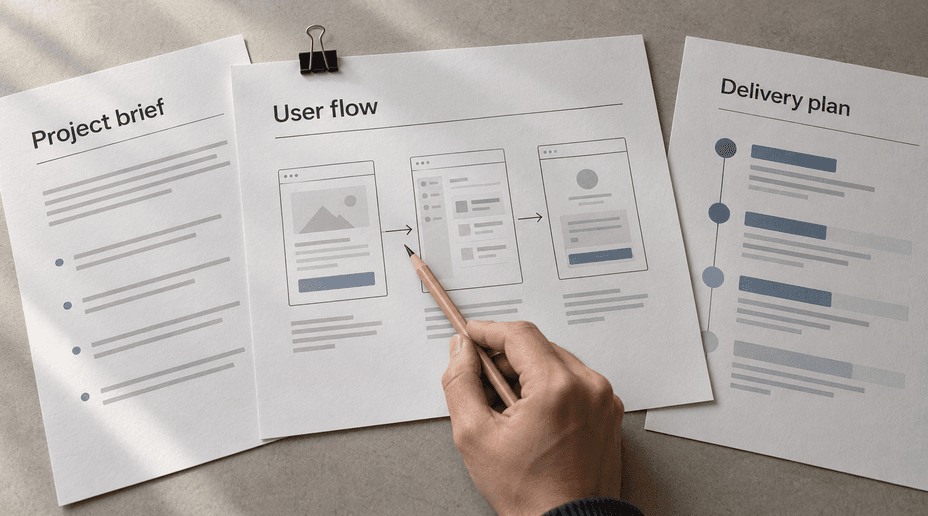
Your Software Development Partner Checklist
- Relevant experience: review a comparable project and confirm the company's role in delivering it.
- Discovery and scope: identify the deliverables, assumptions, open questions, and acceptance criteria.
- Project team: confirm responsibilities, availability, and your main point of contact.
- Communication: agree on progress reviews, feedback channels, and escalation.
- Pricing: compare included work, exclusions, payment milestones, and ongoing expenses.
- Change management: understand how new requests affect the budget, scope, and schedule.
- Technical approach: ask why the recommended tools fit your needs and what alternatives were considered.
- Quality assurance: confirm testing responsibilities and what must pass before launch.
- Ownership and access: document the arrangements for code, files, data, accounts, and handover.
- Post-launch support: clarify maintenance responsibilities, support coverage, and future improvements.
How to Compare the Answers
Create a simple comparison sheet with one column per company. For each question, record the answer, supporting evidence, and anything unresolved. Distinguish a demonstrated capability from a promise. A project walkthrough, sample status report, or written support plan is more useful than a general assurance.
Identify your non-negotiable requirements before selecting a partner. A company with strong design work may still be unsuitable if it cannot support a critical integration or provide the access your business requires. Compare total scope and responsibility alongside price.
Warning Signs Worth Investigating
- Unexplained certainty: a firm budget or launch promise with no stated assumptions, despite significant unanswered questions.
- Unclear responsibility: no straightforward explanation of who will perform the work or resolve delivery problems.
- Vague deliverables: a proposal listing broad services without identifying the features, outputs, or review process.
- Unclear handover: no documented plan for access, documentation, or transferring the project.
- Pressure to commit: requests to move forward before material questions about scope, fees, or support have been answered.
An unanswered question is a reason to investigate. Give the company an opportunity to clarify, then assess whether the explanation is specific and consistent with the proposal.
Planning Your Project With DevConex
DevConex is based in Boca Raton and works with businesses across South Florida and nationwide on custom software, web, mobile, and AI development. Our process moves from discovery and planning through design, development, testing, and launch support.
Bring your business problem, current systems, essential requirements, and any budget or timing constraints. We can discuss the scope and the questions that need answering before development begins. Tell us about your project to start the conversation.
FAQs
What should I look for in a software development company?
Look for relevant project experience, a clear discovery process, accountable team members, understandable estimates, regular progress reviews, and a practical support plan. Verify important claims through project examples, references when available, and written deliverables.
How many software development companies should I compare?
A shortlist of three can be a manageable starting point. Give each company the same brief and evaluate its answers against the same requirements. Expand the search if the initial candidates cannot demonstrate the capabilities your project needs.
Should I choose the company with the lowest quote?
A lower quote can be a good option when it covers the required work and the team can deliver it. First compare assumptions, exclusions, testing, deployment, and support. A smaller scope should not be mistaken for a lower price for the same project.
Do I need a local software development company?
A local partner can make in-person planning easier, but a remote team may also be a good fit. Evaluate working-hour overlap, communication, relevant experience, and accountability. For a Boca Raton or South Florida business, decide how much face-to-face collaboration the project actually requires.
Can a company estimate my project before discovery?
Yes. A preliminary range can help establish whether the project fits your budget. The estimate should state its assumptions and uncertainty. More detailed commitments may require reviewing workflows, integrations, designs, and other dependencies.
What should I prepare before the first meeting?
Prepare a short explanation of the business problem, intended users, current tools, must-have features, budget range, and deadline. Include any existing designs or examples you find useful. You do not need to arrive with a chosen technology stack or a complete technical specification.