
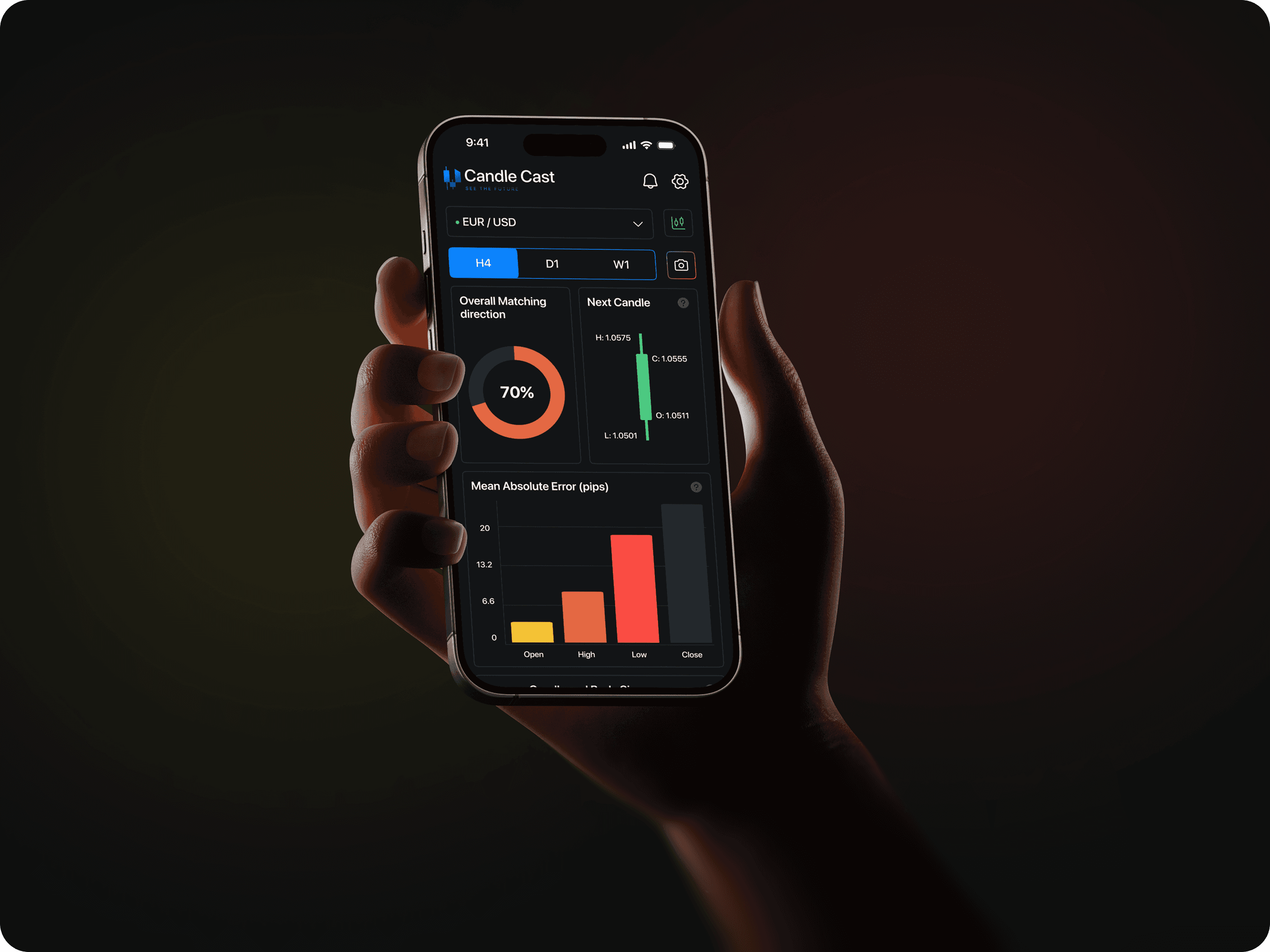



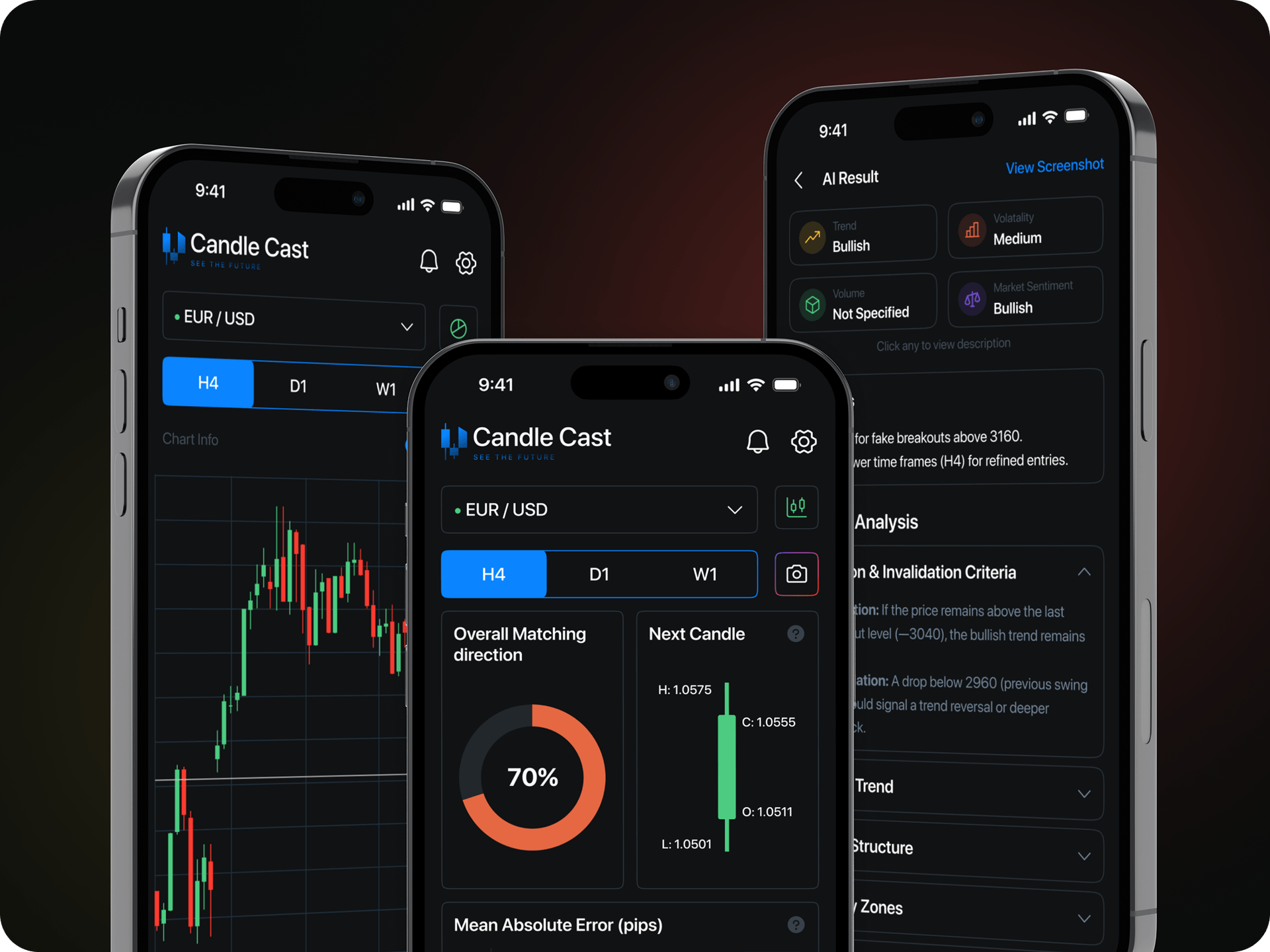
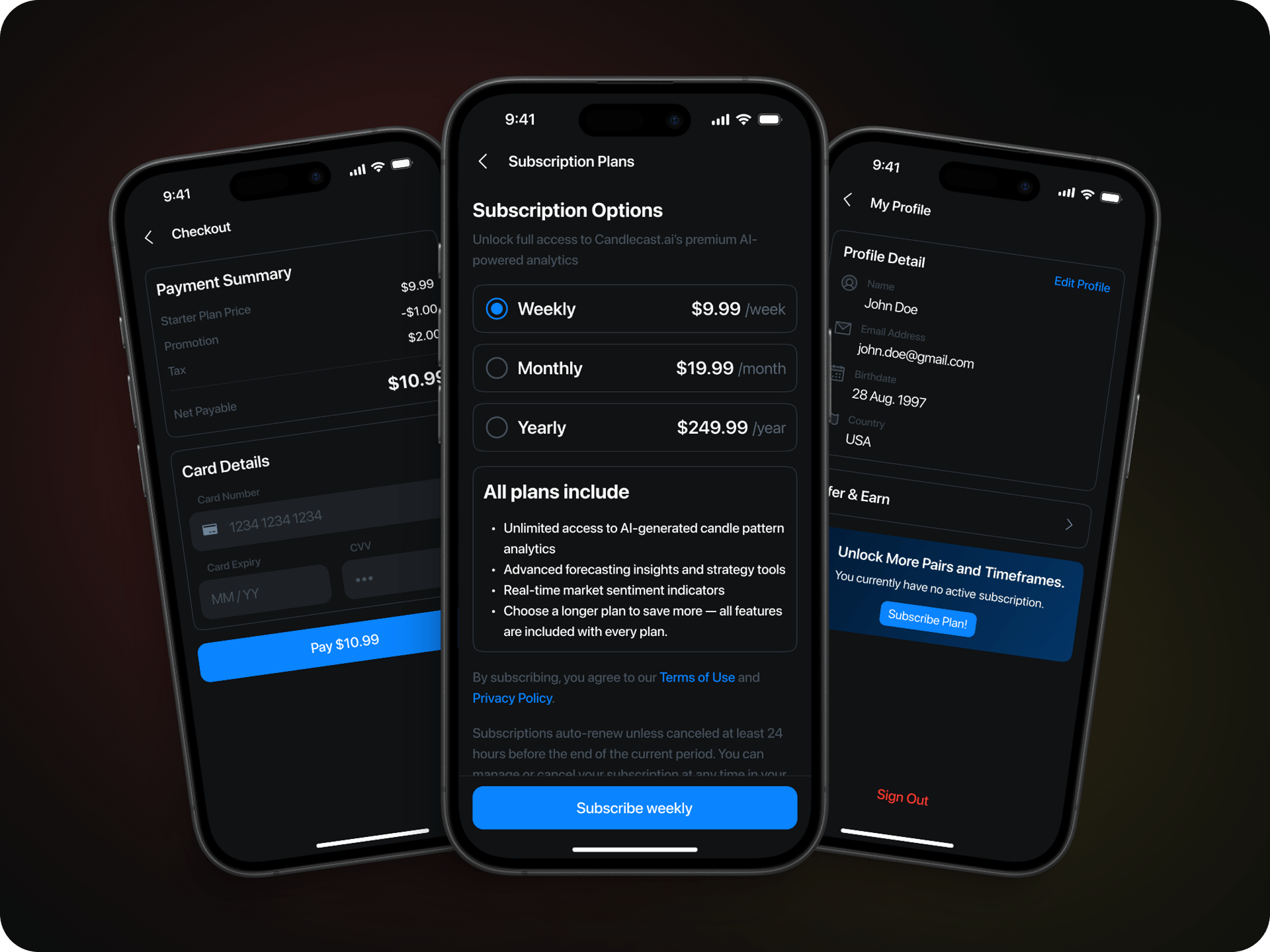
First, we conducted discovery meetings with the customer to figure out how the prediction generated by the AI tool should be presented to the trader – which parameters matter, how much explaining was required along with the prediction, and how the subscription plans impact feature access.
Then, our designers took all of that into account and designed wireframes and user flows, and then made high-fidelity prototypes. Each of the screens – from the prediction dashboard to chart upload and feedback flow – were approved before we started developing anything.
The application was natively developed for iOS in order to provide the quick responses that traders require when dealing with volatile markets. The development of the product happened through a series of sprints and customer check-ins rather than waiting until the end of the project for the big reveal.
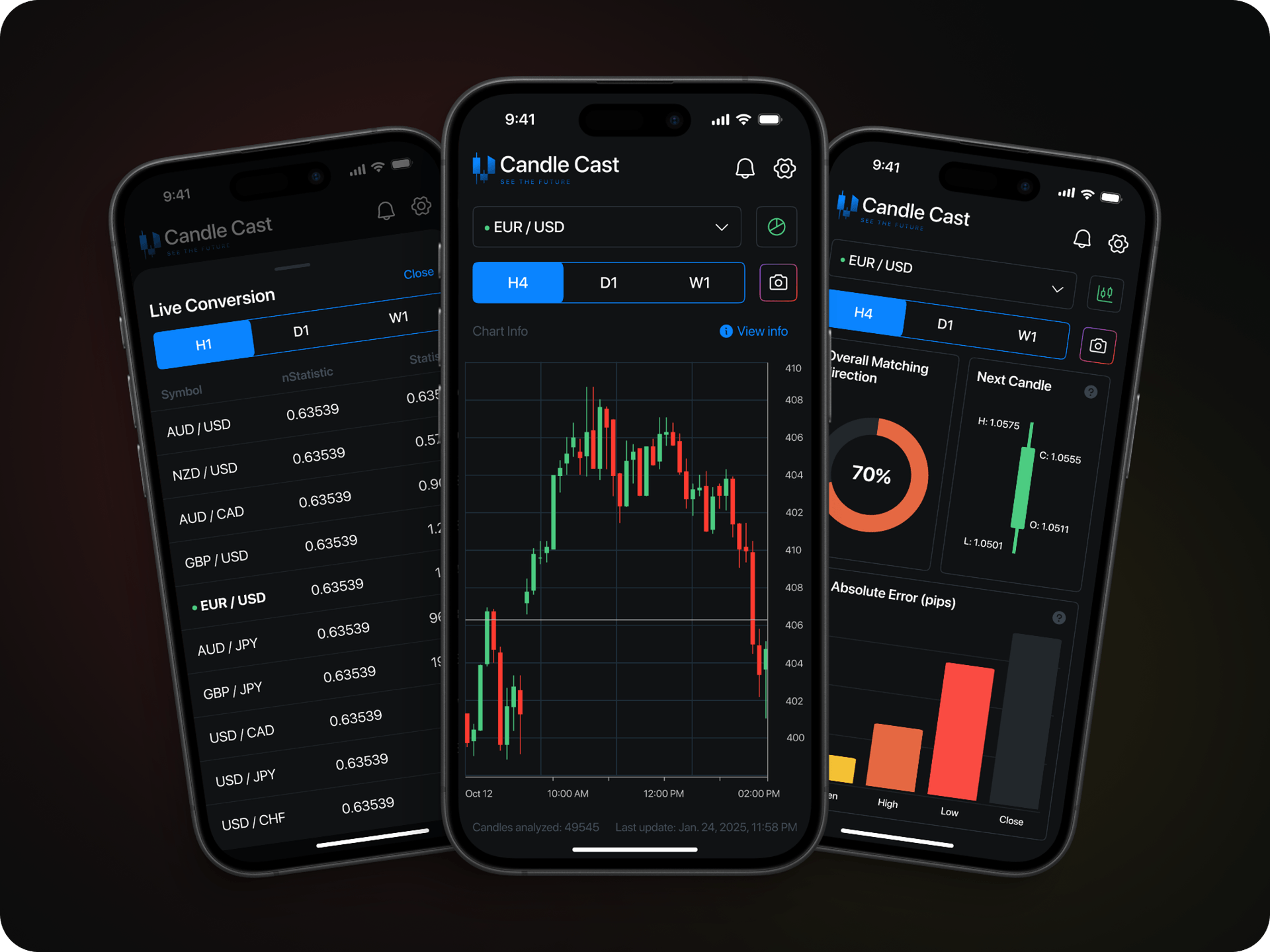
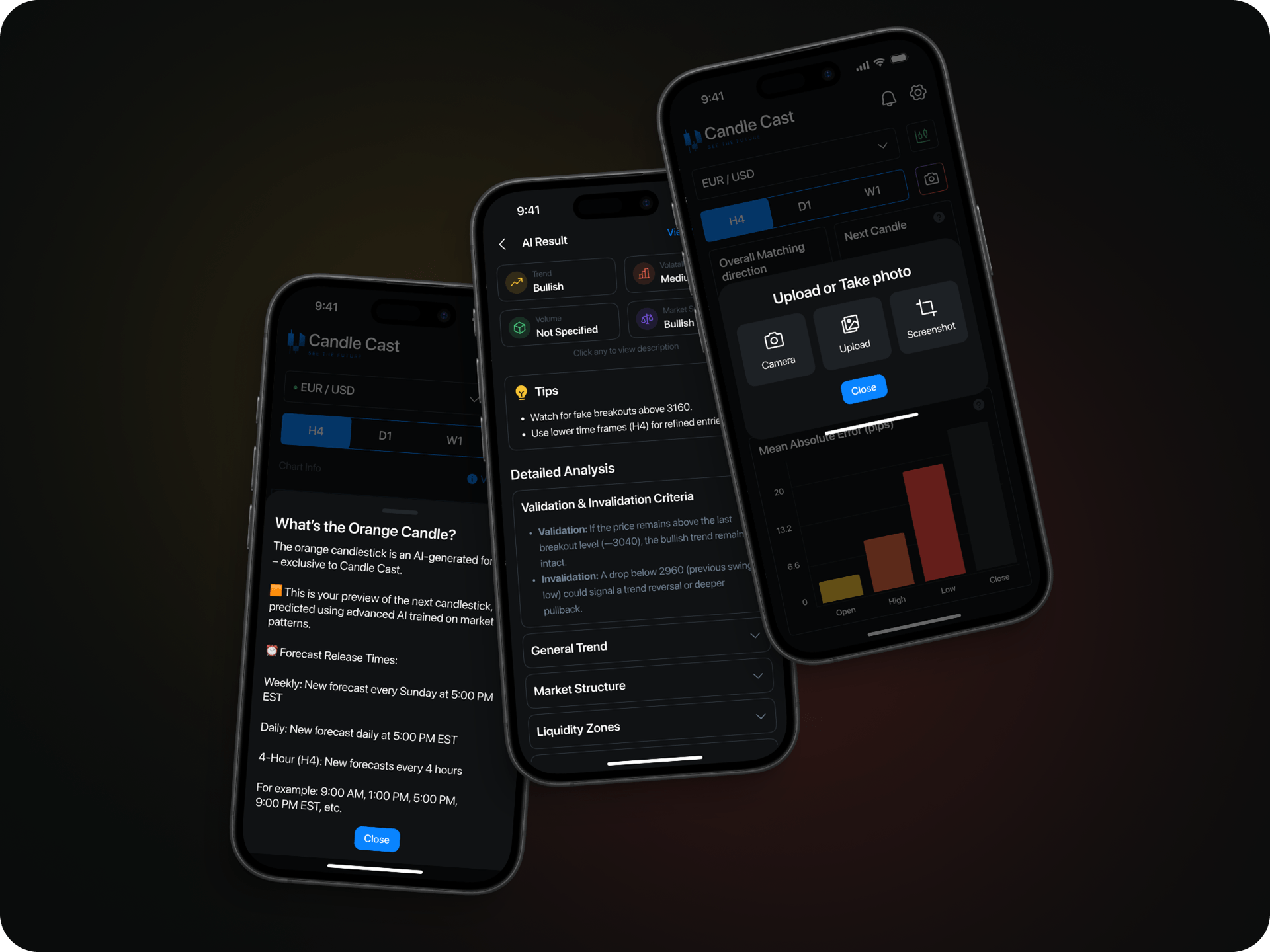
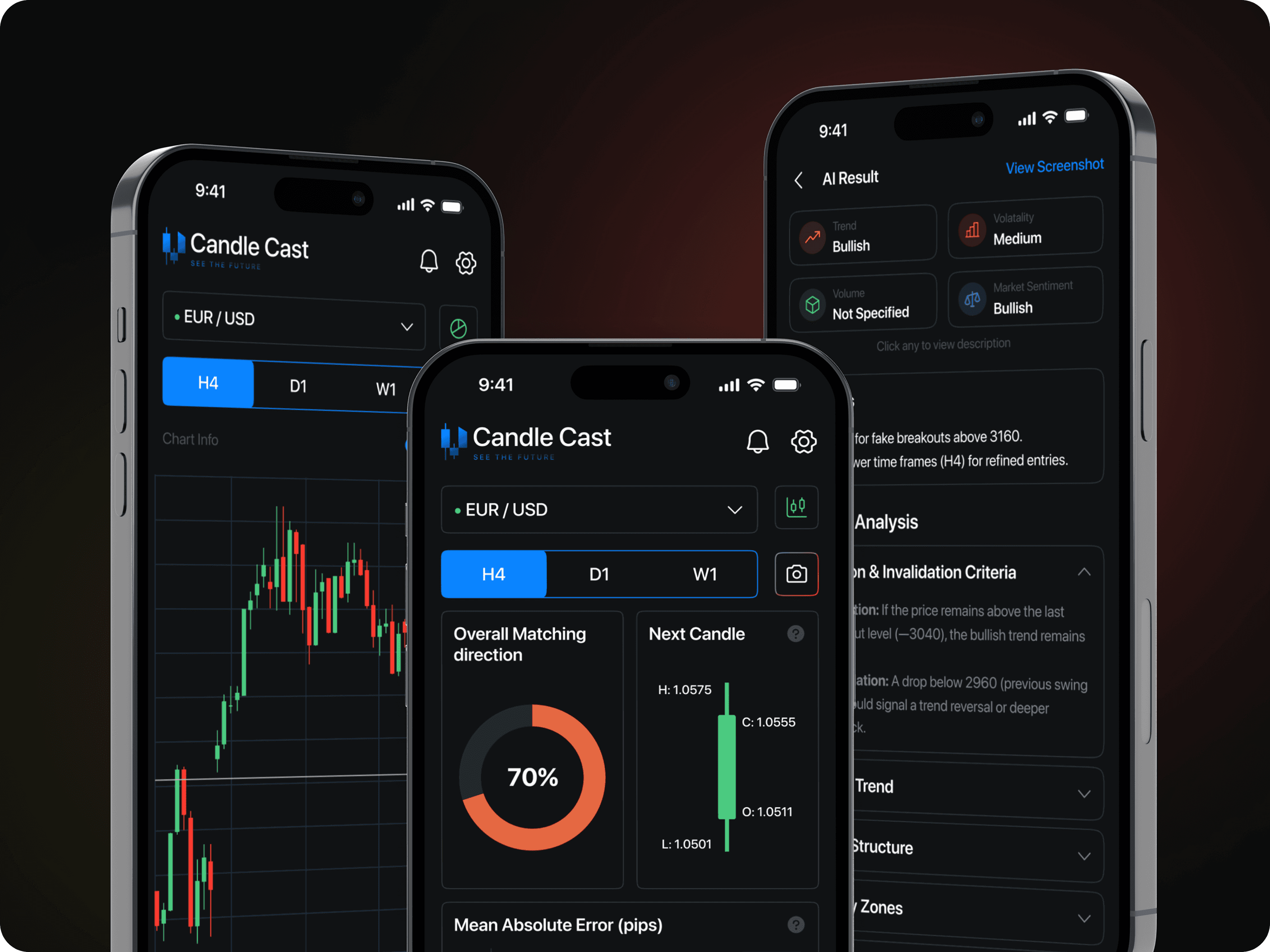
The backend APIs were created and integrated into the system for communication between the AI prediction engine and the application in real-time – including market data input, prediction processing, and the logic of some of the product’s features, such as AI forecasting accuracy dashboard and chart-image analysis, where traders could send screenshots of charts and get AI responses.
Prior to any launch, the app had to undergo stringent QA tests for its functionality and performance validation across various devices; all the milestones in this process were formally approved by QA.
After passing the QA, the client was required to review and approve the build in order for it to be launched into the App Store.

DevConex did an incredible job. Straight to the goal, efficient, and always made sure we understood the process. We will definitely work with them again. Their communication and customer service are both top-notch.